Open this article in your preferred AI tool and ask it to summarize the key points.


How to achieve lights-out warehousing
Guest post by Brightpick CEO Jan Zizka. Follow Jan on LinkedIn here.
Lights-out fulfillment has been the dream of warehouse automation for decades. But even with major technological advances, most automated operations still depend on people for the hardest parts of fulfillment, such as picking individual items, packing shipments, or handling exceptions.
That is starting to change.
Mobile manipulation as a key unlock
At Brightpick, we believe the path to lights-out fulfillment starts with giving robots the dexterity, intelligence, and vision to operate independently in real warehouses.
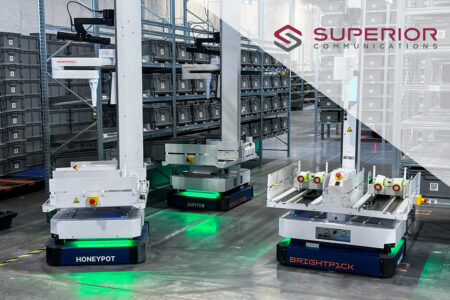
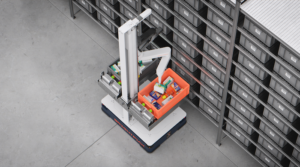
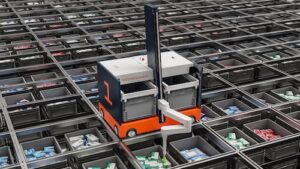
Traditional warehouse automation often depends on fixed islands of automation connected by complex software, conveyors, workstations, and expensive hardware. Mobile manipulation changes the architecture. Instead of moving products between disparate systems, a single mobile robot can move through the warehouse, pick items, consolidate orders, replenish stock, buffer orders, and support multiple fulfillment workflows without constant handoffs.
As a result, robots are no longer just another piece of warehouse equipment, but a robotic workforce capable of taking on repetitive labor across shifts. As Matt Johnson, CEO of The Feed, put it: “We don’t consider Brightpick technology. We consider it labor.”
Achieving lights-out in practice
Achieving lights-out fulfillment is not about building the perfect robot from day one. It is about deploying robots in real customer operations, starting with workflows that can be automated reliably today, then using production data to continuously improve performance over time.
That is the strategy we have taken at Brightpick.
Rather than overengineering in the lab for years, we focused on getting robots into the field early, learning from real warehouses, and continuously improving. Today, we have more than 500 robots deployed with customers. These robots are powered by our multimodal AI, which combines vision and tactile sensing to manipulate a wide range of items in live fulfillment environments. Just as importantly, we built practical fallbacks into the system.
Remote teleoperation and integrated goods-to-person stations allow humans to step in when needed, without requiring them to be physically present beside every robot. Not only does this ensure perfect operational reliability, but it also supports Brightpick’s data flywheel.
Every unsuccessful pick becomes valuable training data. When a robot needs human assistance to pick an item, it captures how the human completes the pick so it can learn from that example. That data feeds back into our AI models, improving future attempts and steadily reducing the number of cases that require human intervention.
This data has applications beyond just picking. The same AI that learns how to recognize, grasp, and handle real items can also support workflows like packing, decanting, and returns handling.
The last 1% is the hardest
Already today, customers such as The Feed and Dr. Max are running full shifts without direct human supervision.
During lights-out operation, Brightpick robots keep working autonomously: picking orders, buffering them for the next shift, replenishing inventory, and dynamically slotting products, while achieving a 99.7% pick success rate. If something needs physical human input, it gets queued as an exception and handled when the team comes back in.
However, true lights-out fulfillment requires an even higher bar.
To run an entire fulfillment operation with minimal human involvement, robots need to reach success rates closer to 99.9999%, equivalent to less than one human intervention per million robot actions. The final edge cases are always the hardest to automate, and the last 1% often adds disproportionate cost for diminishing returns.
That is why the practical path to lights-out is a learning loop. Robots automate the workflows they can handle today, collect real-world data from every pick and exception, and use that data to improve over time. As the system gets better inside each warehouse, more edge cases become routine and the level of automation gradually increases.
A clear path ahead
The path to lights-out fulfillment is a compounding process: automate the workflows that are reliable today, use real-world operations to improve the robots, reduce the number of exceptions, and steadily expand what can run without human supervision.
Lights-out fulfillment will not arrive all at once. It will be earned one workflow, one edge case, and one autonomous shift at a time.
About Brightpick
Brightpick is a leader in AI-powered robotic solutions for warehouses. The company’s multi-purpose AI robots enable warehouses of any size to fully automate order picking, buffering, consolidation, dispatch, and stock replenishment. The award-winning Brightpick solution takes just weeks to deploy and allows companies to keep their warehouse labor to a minimum. With offices in the US and Europe, Brightpick has more than 250 employees and hundreds of AI robots deployed with customers.
- SHARE
-

-
-
-


- SHARE
-
-
-
-