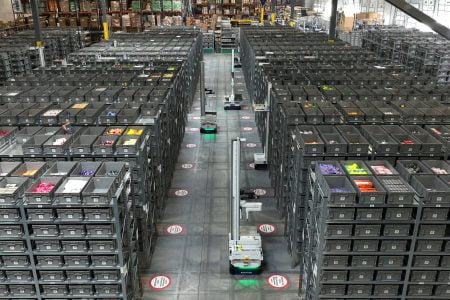
Why warehouse workers love automation
Automation often triggers an instinctive sense of fear. For many workers, the term is associated with layoffs, stricter monitoring, or the displacement of human labor. But talk to employees in automated warehouses and you will hear a very different story.
In practice, automation does not make warehouses more human or less. It does, however, make them more humane. Robots take over exhausting, repetitive work, while people move into safer, more skilled, and less stressful roles. This is why, when automation is done right, warehouse workers are often its strongest supporters.
Better roles, not fewer roles
In automated warehouses, roles do not disappear. They evolve. Robots take over repetitive tasks, while people move into roles that require judgment and responsibility, such as exception handling, quality control, and workflow supervision.
These roles require less physical effort but more skill. Workers gain clearer ownership of processes, make fewer mistakes, and find the work more meaningful. Automation also supports upskilling, improving long-term job security, retention, and overall team stability.
Less walking, lifting, and physical strain
The main cause of burnout in warehouses is not long hours, but constant walking, bending, and lifting.
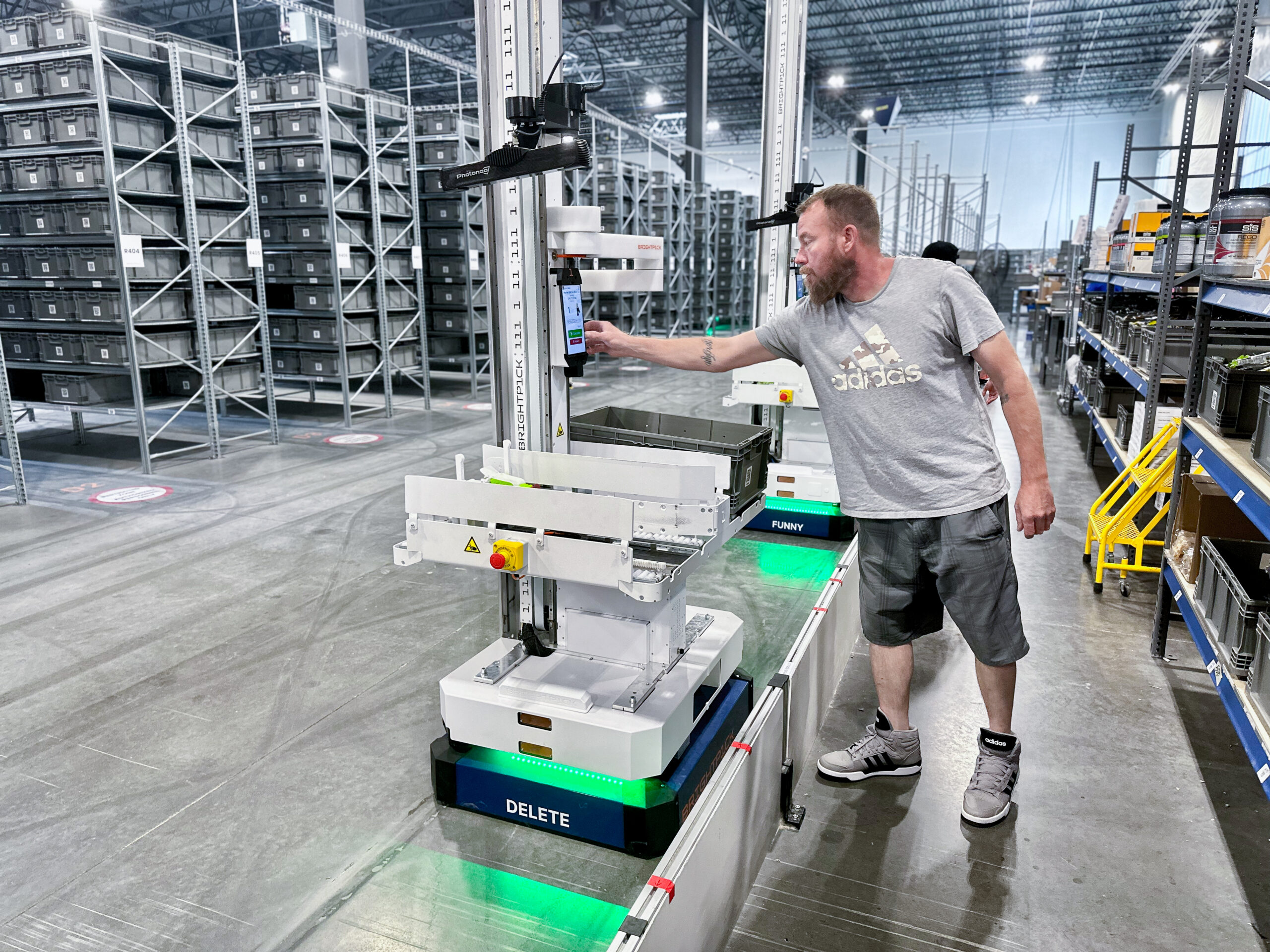
Robots take on travel-intensive tasks, cutting down the walking and repetitive lifting that lead to fatigue. Instead of chasing items across the warehouse, workers stay at ergonomic stations while automation brings the work to them. For many workers, this is the first benefit they notice and the one that makes warehouse work sustainable for years instead of months.
Fewer errors and less stress from mistakes
Mistakes in warehouses are not just expensive. They are stressful for the people making them. Most human errors happen late in shifts, under time pressure, or in chaotic environments where fatigue builds up.
Automation brings structure and consistency. Robots execute or guide tasks the same way every time, while software catches issues early instead of after an order has shipped. As a result, workers are not constantly second-guessing themselves or worrying about costly errors. The job becomes calmer and more predictable, which reduces mental load and day-to-day stress.
Safer workplaces with fewer accidents
Warehouse safety is non-negotiable, and one of the biggest risks on the floor comes from human inattentiveness during physically demanding work, especially when handling heavy trolleys, forklifts, or working at height.
Automation reduces these risks by removing or limiting such activities and replacing them with robots that follow strict, predictable safety rules. With fewer human-operated vehicles and reduced traffic chaos, the warehouse becomes a calmer and safer environment.
Lower turnover and stronger team morale
When work is less exhausting, safer, and more meaningful, people are more likely to stay, resulting in lower employee turnover.
Automation removes the churn caused by burnout and injury, which helps teams stabilize and keeps experience inside the company. With fewer inexperienced new hires, shifts run more smoothly, collaboration improves, and workers feel more confident in their roles. Over time, this creates a stronger sense of pride and ownership. The warehouse stops feeling like a temporary job and starts feeling like a place where people can build skills, contribute meaningfully, and stay long term.
-
 Nicole, warehouse associate (The Feed)
 “Working with the robots is completely different from how our old warehouse operated. Before, we spent most of our shift walking long distances, pushing boxes around, and manually searching for items. Sometimes you would get to a location only to realize the box was empty.
Now the process is much smoother. The robots handle the picking and bring everything exactly where it needs to be, so we are not wasting time or energy walking back and forth. Our job is more focused. We concentrate on packing, checking orders, and getting products out the door. It has made the job less stressful and physically demanding. You actually feel like everything is under control.”
 Nicole, warehouse associate (The Feed)
 Automation makes warehouses more humane
Good automation improves employee morale, physical wellbeing, and staff retention. The result is a calmer, safer workplace where technology supports workers instead of wearing them down. That is why automation decisions should not be based purely on numbers, but on human impact.
See how automation changed work at The Feed
About Brightpick
Brightpick is a leader in AI-powered robotic solutions for warehouses. The company’s multi-purpose AI robots enable warehouses of any size to fully automate order picking, buffering, consolidation, dispatch, and stock replenishment. The award-winning Brightpick solution takes just weeks to deploy and allows companies to keep their warehouse labor to a minimum. With offices in the US and Europe, Brightpick has more than 250 employees and hundreds of AI robots deployed with customers.
- SHARE
-

-
-
-


- SHARE
-
-
-
-