How Good Data Makes Running a Warehouse Easier
When something starts going sideways in the supply chain, most teams do the same thing: dig through reports, ask around, and try to piece together what happened.
But underneath all those questions is a simpler one: what’s happening right now, and how do we fix it?
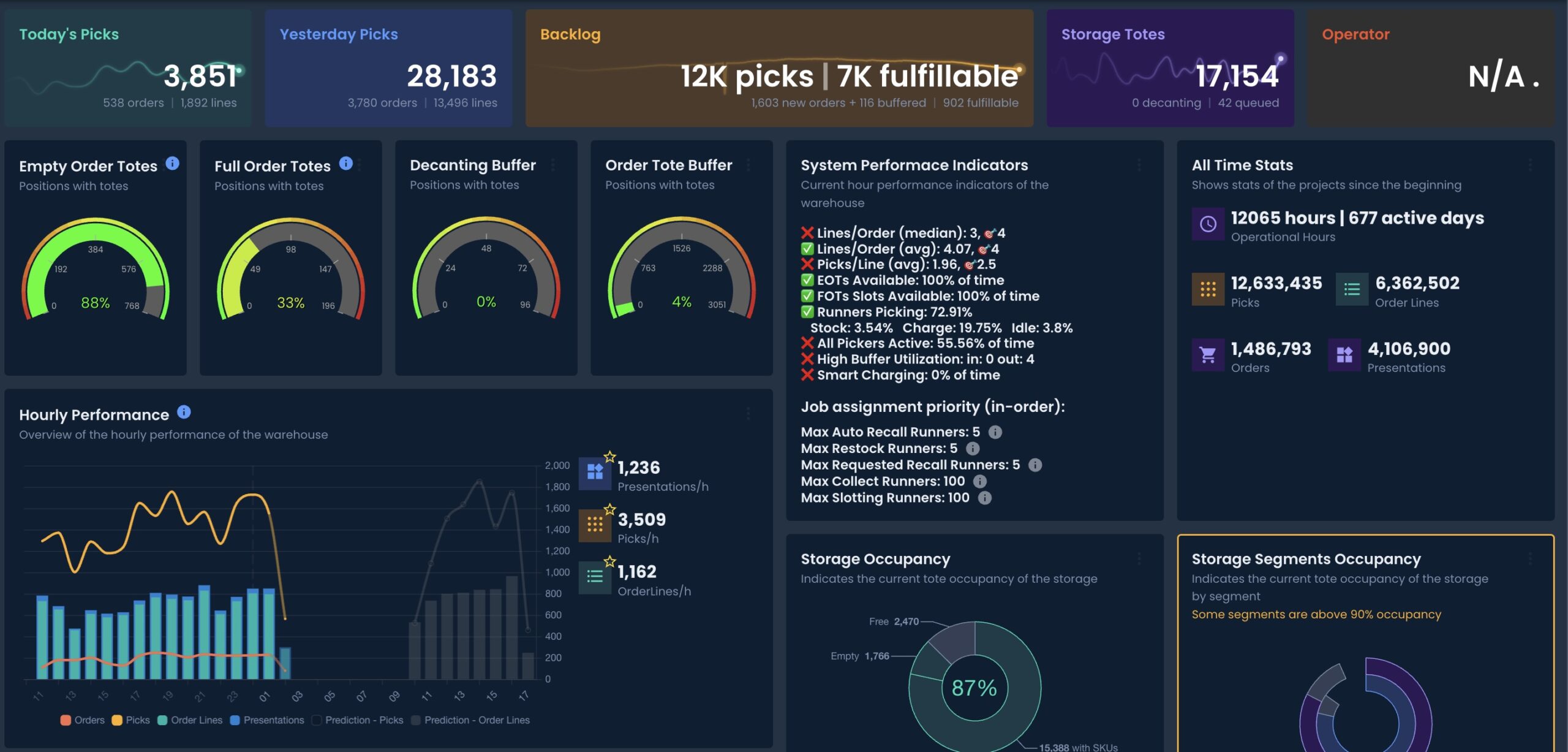
That’s where Brightpick Analytics comes in. By turning operational data into clear dashboards, it helps leadership, operations, and engineering see the same signals and respond faster.
So what does that look like in practice? Here’s what each team gets out of Brightpick Analytics.
Leadership
By the time leadership hears about a problem, it’s often already late. A dip in daily throughput shows up in the end-of-week report, and suddenly everyone is asking “what happened?” instead of “what’s starting to happen?”
Leaders don’t need more data. They need earlier signals and clearer context for decisions. Brightpick Analytics keeps the view high-level while surfacing the indicators that show when operational risk is building.
With Brightpick Analytics, leadership can quickly see:
- What’s the current order backlog, and how much of it can we fulfill immediately? The backlog split (total vs. fulfillable) and its trend reveal growing risk before delays become visible in output.
- Are we getting constrained anywhere? Slot availability and key buffer gauges highlight when shipping speeds are at risk of slowing down, even if overall throughput still looks healthy.
- Are we approaching capacity limits? Overall occupancy and sector-level warnings (e.g. when zones exceed 95% utilization) flag capacity risks before the warehouse hits a hard stop.
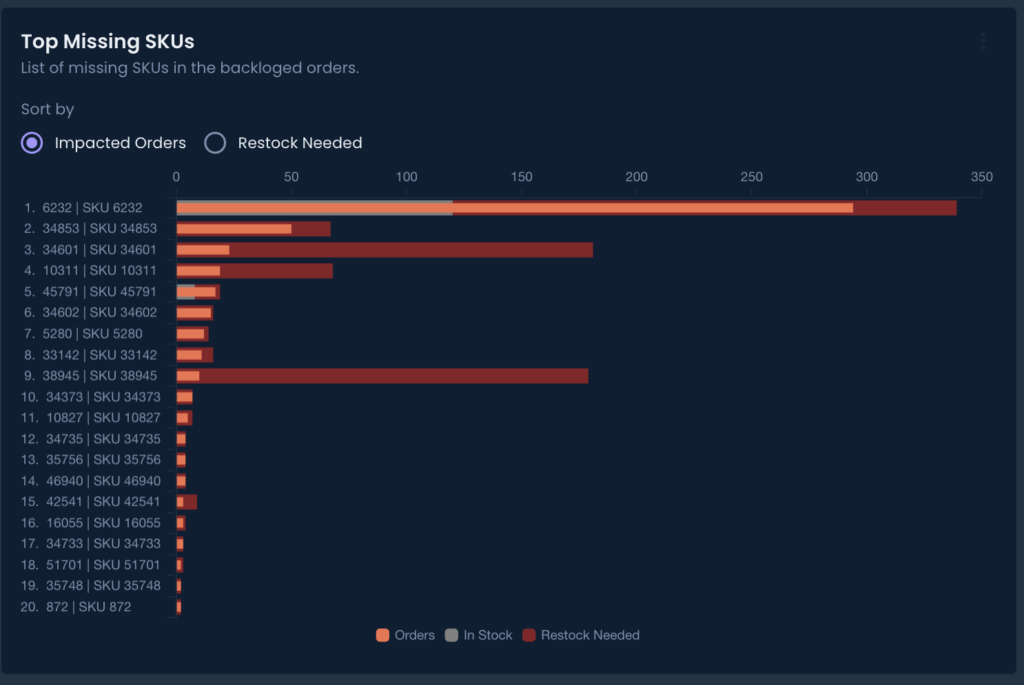
- Is the work mix changing? Top SKUs and order structure help explain performance shifts and demand patterns without guesswork.
Operations
On the warehouse floor, no one wants long investigations – the priority is ensuring orders are always shipped on time.
Brightpick Analytics gives operations teams a clear view of what’s stuck, what’s limiting throughput, and where to focus first.
- What can ship right now, and what’s stuck? The backlog split (total vs. fulfillable) shows whether orders are blocked by inventory availability, not system throughput.
- Which SKUs are blocking orders? Top Missing SKUs highlights the products holding up the most orders and if they need replenishment.
- Is flow being starved or backed up? Buffer and tote gauges (decanting, order tote buffer, empty and full storage totes) reveal where work is slowing down or piling up.
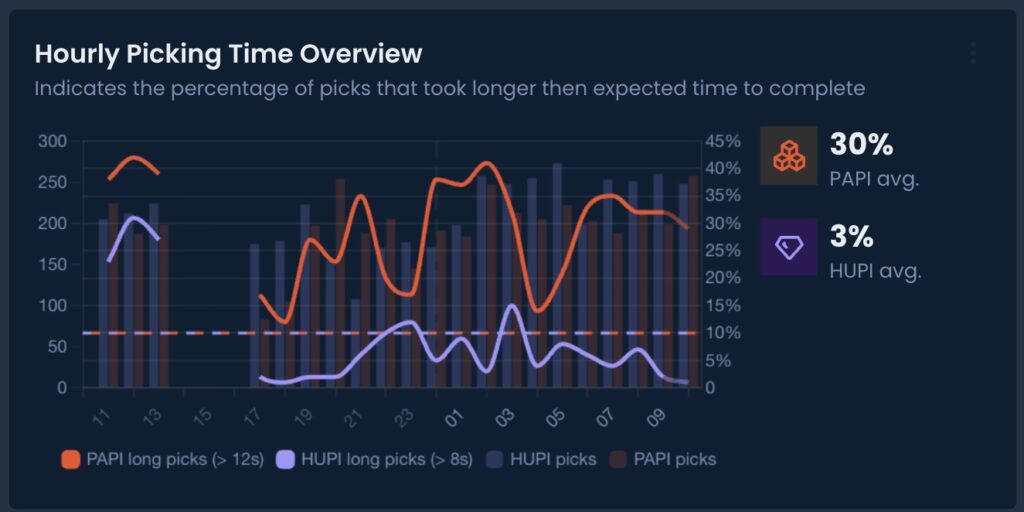
- Are we on pace today? Hourly performance KPIs and cycle time tracking make it easier to detect performance slowdowns early.
Engineering
For engineering teams, half the battle is separating real system issues from normal operational noise. The key is knowing if a performance drop is coming from hardware outages, software configuration, process setup, or simply reaching system capacity.
Brightpick Analytics helps engineers see what changed, where it changed, and what’s actually driving the shift.
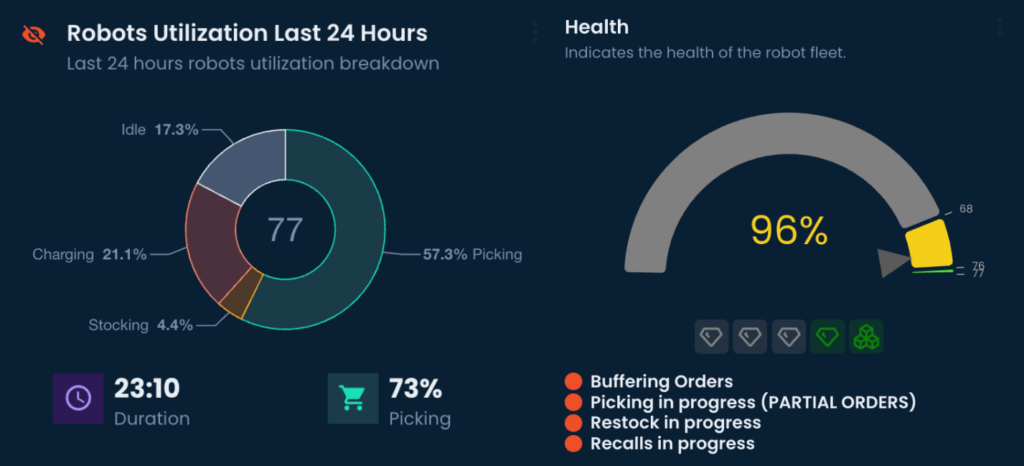
- What is the fleet actually doing? Individual robot status (picking, charging, idle, restocking), along with fleet uptime and utilization.
- Early slowdown signals. Mean time per pick or order
- Station performance. Rates and throughput down to the individual picking station to highlight individual performance issues or robot congestion.
- Did the change improve performance? Daily and hourly data makes it easier to run clean before-and-after comparisons.
When leadership, operations, and engineering are working from the same picture, warehouse decisions get faster and problems surface earlier.
Brightpick Analytics gives every team that shared view. With clear operational signals and 24/7 remote support from Brightpick, teams can detect issues sooner and ensure orders are always fulfilled smoothly.
Want to see Brightpick Analytics in action? Book a demo to see how real-time warehouse signals help teams detect issues earlier and keep operations moving.
About Brightpick
Brightpick is a leader in AI-powered robotic solutions for warehouses. The company’s multi-purpose AI robots enable warehouses of any size to fully automate order picking, buffering, consolidation, dispatch, and stock replenishment. The award-winning Brightpick solution takes just weeks to deploy and allows companies to keep their warehouse labor to a minimum. With offices in the US and Europe, Brightpick has more than 250 employees and hundreds of AI robots deployed with customers.
- SHARE
-

-
-
-


- SHARE
-
-
-
-